

The Australian and New Zealand Standard Classification of Occupations (ANZSCO) code for Australian Visas & Immigration.
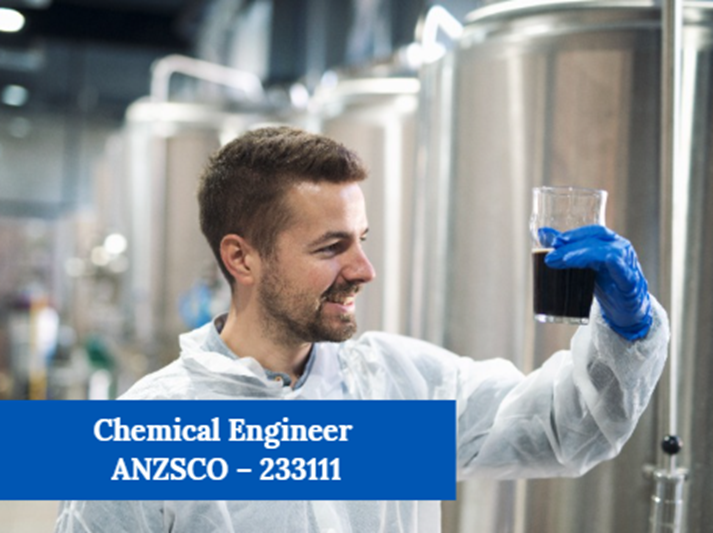
ANZSCO 233111 Chemical Engineer
A chemical engineer develops chemical process principles and specifications, constructs and operates commercial-scale chemical plants, and supervises the manufacturing of products that undergo physical and chemical changes. A license or registration may be required.
Skill Level
In Australia and New Zealand:
Most occupations in this unit group have a level of skill commensurate with a bachelor’s degree or higher qualification. In some instances, relevant experience and/or on-the-job training may be required in addition to the formal qualification (ANZSCO Skill Level 1).
Skills assessment for Chemical Engineers
Chemical engineers are required to write a proper CDR report on their engineering skills for a successful migration to Australia. By acquiring a CDR Sample for a chemical engineer applying for migration in Australia, an engineering technical report can be written. There are two ways to access the credentials of the Chemical Engineer for Engineers Australia, one of which is the right of the Chemical Engineer to be recognized by the Dublin Agreement, the Washington Agreement, and the Sydney Agreement. The next scenario is that a demonstration report should be written by the chemical engineer to test engineering as the last step for Australian immigration is applied.
Chemical Engineer job description, duties and education requirements
- Preparing designs for chemical process systems and planning control systems for processes such as those used to remove and separate components, effect chemical changes, test and evaluate fuels, transfer heat, and control the storing and handling of solids, liquids and gases
- Monitoring the operation and maintenance of equipment to achieve maximum efficiency under safe operating conditions
- Ensuring correct materials and equipment are used and that they conform to specifications
- Diagnosing malfunctions in chemical plants and instituting remedial action
- Studying product utilization and pollution control problems
- Reviewing plans for new products and submitting material selection recommendations in accordance with design specifications and factors such as strength, weight and cost
- Planning and implementing laboratory operations to develop new materials and fabrication procedures for new materials to fulfil production cost and performance standards
- Conferring with producers of materials, such as metals, ceramics, polymers, cements and elastomers, during the investigation and evaluation of materials suitable for specific product applications
- Reviewing product failure data and implementing laboratory tests to establish or reject possible causes, and advising on ways to overcome any problems